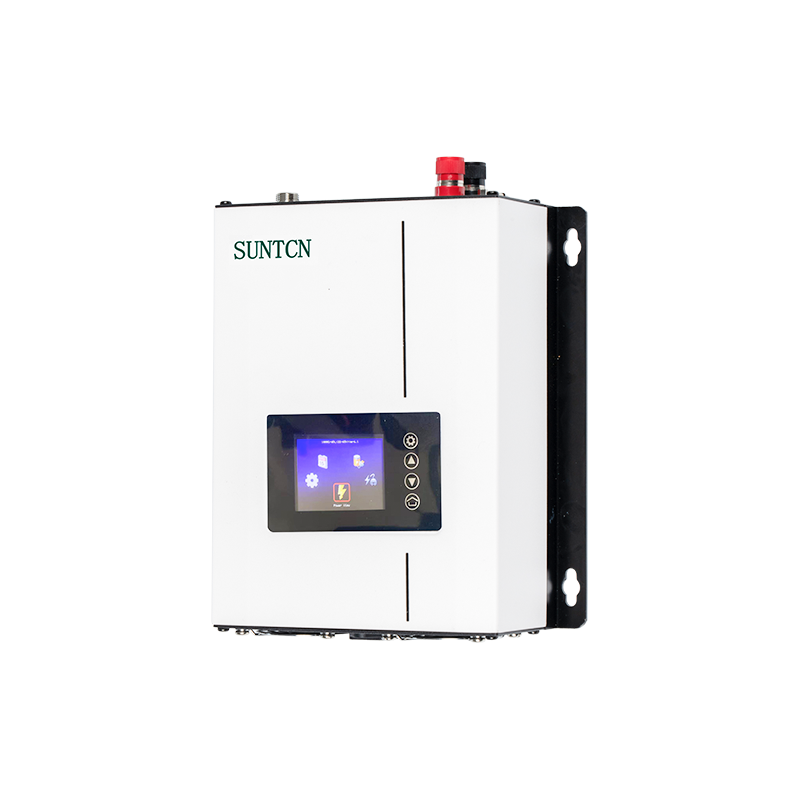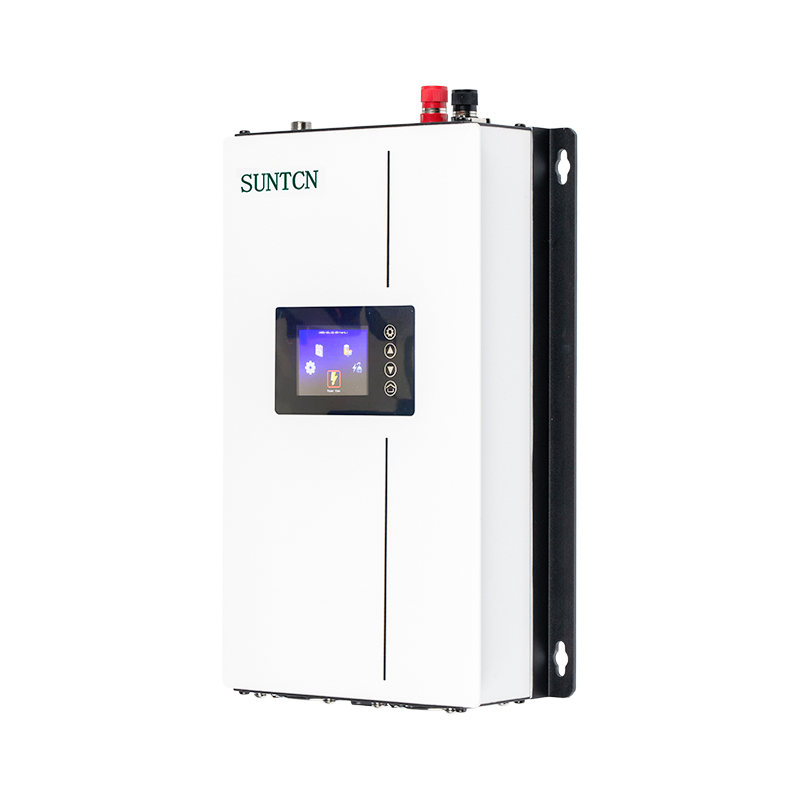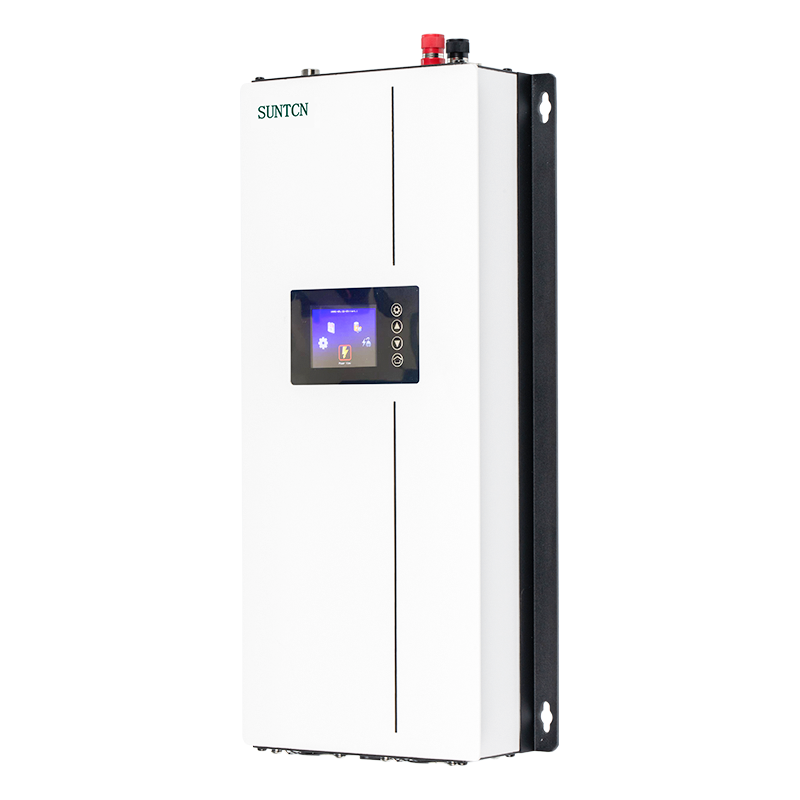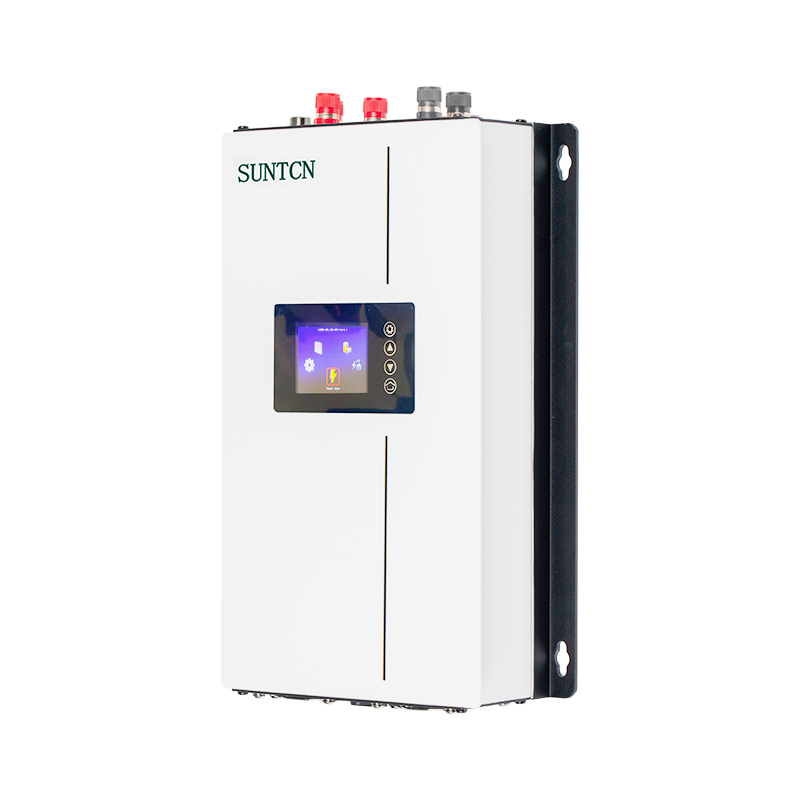
The Role of a Grid Tie Inverter in a Wind Energy System
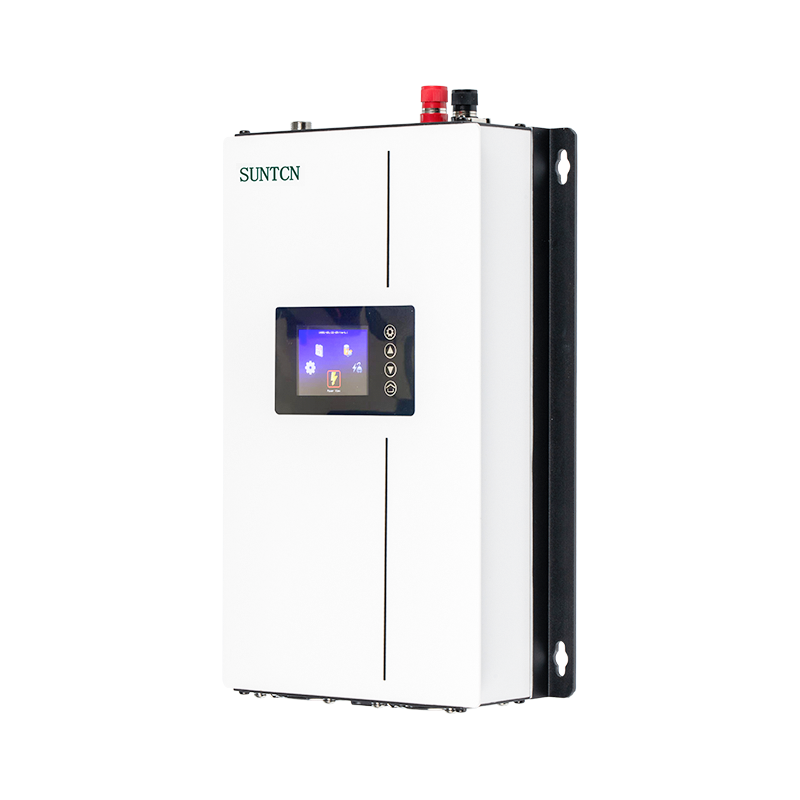
A wind turbine generates electricity in a form that cannot be fed directly into the utility grid or used by standard household appliances. Small and medium wind turbines typically produce variable-frequency, variable-voltage AC output — or in many cases, three-phase AC that is rectified to DC by an internal rectifier — and that raw output must be converted into clean, stable, grid-synchronised AC before it can be exported or consumed on-site. That conversion is the job of the grid tie inverter. It takes the irregular electrical output of the turbine, processes it through power electronics, and produces a pure sine wave at the grid's voltage and frequency — typically 120/240V at 60 Hz in North America, or 230V at 50 Hz in Europe and other regions. Without this device, wind energy cannot interact with the grid, cannot offset your electricity consumption, and cannot earn net metering credits. Understanding how grid tie inverters work and what distinguishes a well-matched unit from a poorly chosen one is essential for anyone commissioning a wind energy system.
How a Wind Turbine Grid Tie Inverter Actually Works
The internal process of a grid tie inverter involves several distinct stages, each handling a specific aspect of the power conversion and grid synchronisation task.
Input Rectification and DC Bus Regulation
If the turbine produces AC output — as permanent magnet alternators (PMAs) do — the inverter's stage rectifies this to DC using a diode bridge or active rectifier. The resulting DC voltage fluctuates with wind speed, so a boost converter or buck-boost stage regulates it to a stable DC bus voltage that the inverter's output stage can work with consistently. Turbines that already include an internal rectifier deliver DC directly to the inverter input, bypassing this stage.
Power Point Tracking (MPPT)
Wind turbines have a power curve — a relationship between wind speed and electrical operating point — that changes continuously as wind speed varies. MPPT algorithms inside the inverter continuously adjust the electrical load presented to the turbine to extract the available power at any given wind condition. Wind MPPT differs from solar MPPT because wind turbine power curves are cubic functions of wind speed and because the turbine's rotational inertia means the operating point changes more gradually. A well-implemented wind MPPT algorithm can improve energy harvest by 10 to 20 percent compared to a fixed-load design, which is a meaningful difference in annual energy production.
Grid Synchronisation and Anti-Islanding
The inverter's output stage uses insulated gate bipolar transistors (IGBTs) switched at high frequency under pulse-width modulation (PWM) control to synthesise a pure sine wave precisely synchronised to the grid voltage and frequency. A phase-locked loop (PLL) continuously monitors the grid and keeps the inverter's output in phase. Anti-islanding protection is a mandatory safety function that detects when the grid has gone down — due to a fault or utility maintenance — and disconnects the inverter within milliseconds, preventing it from energising a dead line while utility workers may be on it. All grid tie inverters sold in compliant markets must meet anti-islanding standards such as IEEE 1547 in the United States or VDE 0126-1-1 in Germany.
Wind-Specific vs. Solar Grid Tie Inverters: Why They Are Not Interchangeable
A common mistake made by -time wind system installers is attempting to use a solar grid tie inverter with a wind turbine. While both devices perform DC-to-AC conversion, their input characteristics are fundamentally different, and solar inverters are not designed to handle wind turbine inputs safely or efficiently. Solar panels produce a relatively stable DC voltage within a defined range, while wind turbines produce a wide-ranging, rapidly varying input that can swing from near zero to well above the inverter's rated input voltage as gusts arrive. A solar inverter exposed to this voltage variability will trip its overvoltage protection repeatedly, operate inefficiently outside its MPPT window, or fail prematurely due to repeated stress cycles. Wind-specific grid tie inverters are designed with wider input voltage ranges, turbine-optimised MPPT algorithms, and input protection circuits matched to the electrical behaviour of wind generators. Using the correct device is not simply a performance consideration — it is a reliability and safety requirement.
Key Specifications to Evaluate When Choosing an Inverter
Matching an inverter to a specific wind turbine and installation requires careful attention to several interdependent specifications. The following parameters are the important to verify before purchase.
Input Voltage Range
The inverter's DC input range must encompass the full voltage output range of your turbine across all operating wind speeds, including gusts above rated wind speed. If your turbine's rectified output can reach 400V DC at high wind speeds, an inverter with a input of 350V DC will trip its overvoltage protection and disconnect from the turbine precisely when the wind is at its productive. Typical wind grid tie inverters for small turbines accept input ranges from around 45V DC to 500V DC or wider; always verify the turbine manufacturer's stated open-circuit voltage and rated operating voltage range against the inverter's specification sheet.
Rated Power and Overload Tolerance
The inverter's rated power should match the turbine's rated output power as closely as practical. Significantly undersizing the inverter clips the turbine's peak output during high-wind periods; oversizing it means the inverter operates at low efficiency during the frequent light-wind conditions that dominate sites' wind profiles. A modest oversize of 10 to 15 percent is reasonable to allow for brief gusts above rated wind speed without tripping the inverter's overload protection. Check the inverter's overload specification — expressed as a percentage of rated power for a defined duration — to understand how it handles the frequent short-duration power spikes that characterise turbulent wind sites.
Conversion Efficiency
Inverter efficiency is not a single number — it varies with input power level. The CEC weighted efficiency or European weighted efficiency figures, which average efficiency across multiple operating points weighted by their frequency of occurrence, are more useful than peak efficiency alone. For a wind turbine that spends much of its time at partial load in light winds, efficiency at 10 to 30 percent of rated power has a significant impact on annual energy harvest. High-quality wind grid tie inverters achieve peak efficiencies above 97 percent and maintain weighted efficiencies above 95 percent.
Inverter Comparison: Key Specs at a Glance
The table below summarises typical specification ranges for wind turbine grid tie inverters across three common power classes used in residential and small commercial applications.
| Power Class | Typical Rated Power | DC Input Range | AC Output | Peak Efficiency |
| Small residential | 400W – 2 kW | 45V – 300V DC | 120V / 240V single-phase | 93% – 95% |
| Mid-size residential | 2 kW – 10 kW | 100V – 500V DC | 240V single-phase or 208V 3-phase | 95% – 97% |
| Small commercial | 10 kW – 100 kW | 200V – 800V DC | 480V 3-phase | 97% – 98.5% |
Grid Connection Requirements and Compliance
Connecting any generation equipment to the utility grid requires compliance with both national electrical codes and utility interconnection requirements. In the United States, inverters must be listed to UL 1741 and comply with IEEE 1547 for grid interconnection. Many utilities also require UL 1741 SA (Supplement A) certification, which adds advanced grid support functions including voltage and frequency ride-through and reactive power control — capabilities that modern grid operators need from distributed generation resources. In Europe, the relevant standard is EN 50549, which has replaced older national standards in EU member states. Before purchasing an inverter, confirm with your utility which certifications they require for interconnection approval; installing a non-compliant device can result in the utility refusing to energise the interconnection or requiring costly replacement.
Additional grid connection considerations include:
- Net metering compatibility: The inverter must be capable of bi-directional metering support, allowing exported energy to be credited against consumption. Confirm this with your utility's interconnection team before installation.
- Power factor and reactive power: Some utilities require inverters to operate at a specified power factor or to provide reactive power support. Higher-specification inverters include programmable power factor control.
- DC injection limits: Grid standards limit the amount of DC current an inverter can inject into the AC grid, typically to less than 0.5 percent of rated output. Quality inverters include DC injection monitoring and limiting circuits to remain within this threshold.
Installation Environment and Monitoring Capabilities
Wind turbine installations are often in exposed locations — rural properties, hilltops, coastal sites — where the inverter may be mounted outdoors or in unheated outbuildings. Verify the inverter's operating temperature range, ingress protection rating (IP65 is the for outdoor installation), and whether it includes internal corrosion protection for salt-air or high-humidity environments. Thermal management is also important: inverters that rely on active cooling fans in dusty or wet environments require more maintenance than fanless, convection-cooled designs.
Modern wind grid tie inverters include data logging and remote monitoring via Wi-Fi, Ethernet, or RS485 Modbus interfaces. Access to real-time and historical production data — power output, energy yield, turbine operating voltage, and fault logs — is valuable both for verifying that the system is performing to expectation and for diagnosing issues before they become costly failures. When comparing inverters, treat monitoring capability as a functional requirement rather than an optional feature; a system you cannot observe is a system you cannot optimise or maintain proactively.
Making the Right Inverter Choice for Your Wind System
Selecting a wind turbine grid tie inverter is a decision that affects every kilowatt-hour your turbine will ever produce. Start with your turbine manufacturer's recommended inverter specifications — input voltage range, power rating, and MPPT compatibility — and treat these as requirements rather than guidelines. Then verify grid compliance certifications required by your utility, confirm the installation environment specifications, and evaluate the monitoring and communication features. An inverter chosen systematically against these criteria, from a manufacturer with a documented track record in wind applications and a local service network, will deliver reliable performance for a decade or more. Cutting corners on inverter specification to reduce upfront cost invariably results in higher lifetime costs through reduced energy yield, increased maintenance, and premature replacement.